Finding head lice in your family is stressful enough without worrying about your couch or mattress. Once you've started treating the hair, it's natural to wonder whether lice could still be on the furniture everyone uses.
So, what can you spray on furniture to kill lice? Hygea Natural's Lice Killer Spray is designed for treating lice on approved household surfaces. However, furniture spraying isn't usually necessary for head lice. Understanding when to clean, when to consider a spray, and how to use it safely can help you manage the situation without unnecessary work.
Can Head Lice Live on Furniture?
Head lice live primarily on the human scalp, where they feed and reproduce. Unlike bed bugs, they don't hide in furniture for extended periods. When a head louse falls onto a couch, pillow, or mattress, it usually survives for less than one or two days without feeding.
Lice eggs are also unlikely to hatch away from the warmth of the scalp. This means furniture isn't the main source of head lice infestations. Most cases spread through direct head-to-head contact, particularly among children at school or during play.
What Can You Spray on Furniture to Kill Lice?
If you're looking for a lice-killing spray for furniture, choose a product specifically labeled for treating lice on household surfaces.
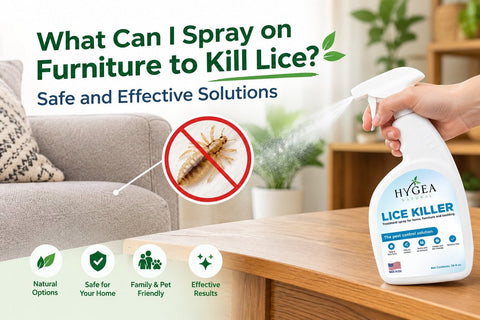
Lice Killer Spray Treatment for Home by Hygea Natural is designed for this purpose. The formula is intended for use on approved furniture, mattresses, carpets, and other household surfaces.
A dedicated furniture spray is different from a scalp treatment. It's meant for household surfaces, not human hair or skin.
Why Choose a Spray Made for Lice?
Not every insect-control product is suitable for furniture. Some sprays are intended for outdoor pests, while others contain ingredients or have application requirements that make them inappropriate for frequently touched household surfaces.
If you decide to use a spray, choosing one specifically intended for household lice treatment helps you avoid using an unrelated insecticide.
When selecting a product, look for clear information about:
· The pests the spray is designed to control
· Approved surfaces and materials
· Application and drying instructions
· Safety precautions around children and pets
Even products marketed as non-toxic should be used according to their instructions. Always check the label before applying a spray to furniture, bedding, or other household materials.
What Furniture Should You Treat for Lice?
You don't need to spray every piece of furniture in the house. In fact, routine furniture spraying isn't generally recommended for head lice.
If you're concerned about household surfaces, concentrate on areas that recently had direct contact with the affected person's head.
Sofas and Upholstered Chairs
Living room furniture is a common concern because family members spend considerable time sitting or lying on it.
If someone with lice recently rested their head against a sofa cushion or upholstered chair, vacuuming the area is usually enough. If you choose to use a lice spray, make sure the product is approved for that upholstery material.
Mattresses and Bed Frames
Mattresses deserve attention because they regularly come into contact with hair during sleep.
Remove recently used bedding and wash it separately. Vacuum the mattress surface, especially where the person's head normally rests.
A dedicated household lice spray may be used on compatible mattress surfaces if permitted by the product label. Allow the mattress to dry according to the manufacturer's instructions before using it again.
Carpets and Rugs
A few lice may fall onto carpets or rugs, although the likelihood of catching head lice from these surfaces is very low.
Vacuuming is generally sufficient. If you decide to use a household lice spray, check whether the product is suitable for the carpet or rug material and follow its application instructions.
Car Seats and Fabric Headrests
Car seats are another place worth checking, especially when an affected family member regularly rests their head against a fabric headrest.
Vacuum accessible fabric surfaces and follow the vehicle or car seat manufacturer's cleaning guidance.
For child safety seats, don't apply pest-control sprays unless both the seat manufacturer and the spray label specifically permit their use.
How to Use Lice Spray on Furniture Safely
If you choose to use a household lice spray, applying it correctly is important. These steps can help you treat appropriate surfaces without unnecessary applications.
Step 1: Identify Recently Used Areas
Start with furniture that has been in close contact with the affected person's hair during the previous two days.
This might include a favorite sofa, mattress, upholstered chair, or fabric headrest. There's usually no reason to treat furniture that hasn't been used.
Step 2: Check the Surface and Product Label
Before spraying, read the product instructions and furniture care label.
Make sure the spray is suitable for the particular fabric or finish. Testing a small, inconspicuous area first can help identify possible discoloration or damage.
Step 3: Apply the Spray as Directed
Apply the lice spray only to surfaces approved on the product label, following the recommended amount and application method. Avoid spraying people, pets, hair, or skin. A household lice spray is not a substitute for an appropriate head lice treatment.
Step 4: Allow Surfaces to Dry
Follow the product's drying instructions before allowing anyone to use the treated furniture again.
Avoid placing bedding or cushions back onto damp surfaces. If you're treating a mattress, make sure it is ready for normal use before making the bed.
Step 5: Vacuum and Complete the Cleanup
Vacuum recently used furniture and surrounding areas to remove loose hair, debris, and any lice that may have fallen onto these surfaces.
Can You Use Regular Bug Spray to Kill Lice on Furniture?
It's tempting to reach for whatever insect spray you already have at home. However, a general-purpose bug spray isn't necessarily suitable for head lice or indoor furniture.
Some insecticides are formulated for ants, cockroaches, or other pests and may have different surface restrictions. Using them outside their labeled purpose can create unnecessary exposure risks.
What Else Helps Remove Lice from Furniture and Bedding?
A dedicated furniture spray can be an optional part of household lice management, but basic cleaning is generally enough to address lice that may have fallen onto household surfaces.
The following steps can help you manage recently used items without excessive cleaning.
Vacuum Frequently Used Furniture
Vacuum sofas, upholstered chairs, mattresses, and floors where the affected person recently sat or lay.
There's no need to spend hours deep-cleaning every room. The risk of lice spreading from household furniture is relatively small.
Wash Bedding and Clothing
Wash pillowcases, sheets, towels, hats, and clothing used during the two days before lice treatment.
When fabric care instructions allow, use hot water at 130°F (54°C) or higher and dry items using high heat. Items that cannot be washed or dry-cleaned can be sealed in a plastic bag for two weeks.
Clean Hairbrushes and Combs
Soak combs and brushes used by the affected person in water heated to at least 130°F for five to ten minutes. Avoid sharing brushes, hats, and hair accessories until the infestation has been addressed.
Keep Scalp Treatment on Schedule
The most important part of controlling head lice happens on the scalp. Use an appropriate over-the-counter or prescribed lice treatment and follow its instructions. Check the hair regularly with a fine-toothed lice comb.
Common Mistakes to Avoid When Treating Furniture for Lice
When lice appear, it's understandable to want to clean everything immediately. However, certain approaches can create extra work without improving the outcome.
If you're managing an infestation, our guide on how to treat lice at home explains the importance of treating the scalp while keeping household cleaning practical.
Here are some common mistakes to avoid:
· Spraying every room: Head lice don't establish long-term infestations in furniture. Focus on recently used areas instead.
· Using furniture spray on the scalp: Household sprays aren't intended for human hair or skin. Use an appropriate head lice treatment.
· Ignoring product instructions: Always check approved surfaces, application requirements, and drying times.
· Forgetting to check family members: Examine close contacts for live lice and follow appropriate treatment guidance.
· Expecting lasting protection: A furniture spray doesn't prevent future infestations caused by head-to-head contact.
Avoiding these mistakes can make lice management simpler while reducing unnecessary pesticide exposure.
A Better Way to Address Lice at Home
Managing head lice becomes easier when you understand the difference between scalp treatment and household cleaning.
· For hair and scalp: Use an appropriate head lice treatment, comb carefully, and follow the recommended treatment schedule. These steps are essential because the scalp is where head lice live and reproduce.
· For household surfaces: Vacuum recently used furniture, wash bedding and clothing, and clean personal items that may have come into contact with the affected person's hair.
If you prefer a targeted spray for compatible furniture or mattresses, Hygea Natural's Lice Killer Spray Treatment for Home is designed for this purpose.
It offers a dedicated household lice treatment option without relying on general-purpose insecticides. However, spraying remains optional for routine head lice cleanup, and it should never replace proper scalp treatment.
Final Thoughts
If you're wondering what you can spray on furniture to kill lice, choose a product specifically intended for household lice treatment and suitable for the surfaces you're concerned about.
In most cases, vacuuming recently used furniture and washing bedding are enough to manage the small risk of lice remaining in the household environment.
For families who choose additional targeted surface treatment, Hygea Natural's Lice Killer Spray Treatment for Home is designed for approved mattresses, couches, and other compatible household surfaces.