Finding lice in your hair or your child's hair can be frustrating. The constant itching, repeated scalp checks, and worry about spreading lice to family members can make the situation stressful.
If you're wondering, "How do I remove lice?" The best approach is to use an appropriate head lice treatment, carefully comb through the hair, and follow the recommended treatment schedule. Cleaning recently used personal items can also help.
This guide explains how to remove lice and their eggs, prevent reinfestation, and manage household surfaces without unnecessary cleaning or spraying.
How Do You Know If You Have Head Lice?
Before starting treatment, make sure you're dealing with an active head lice infestation.
Head lice are tiny insects that live on the scalp and feed on human blood. They spread mainly through direct head-to-head contact, making them common among school-aged children.
Some people experience itching, while others may not notice symptoms immediately.
Common signs include:
-
Frequent scalp itching, especially behind the ears
-
A crawling or tickling sensation in the hair
-
Small red bumps around the scalp or neckline
-
Tiny insects moving through the hair
-
Lice eggs, called nits, attached to hair strands
Use a fine-toothed lice comb and bright lighting to examine the hair. Finding live lice is the clearest sign of an active infestation.
How Do I Remove Lice from My Hair?
Removing head lice requires careful treatment and follow-up checks. While the process takes patience, following the right steps can help you manage the infestation successfully.
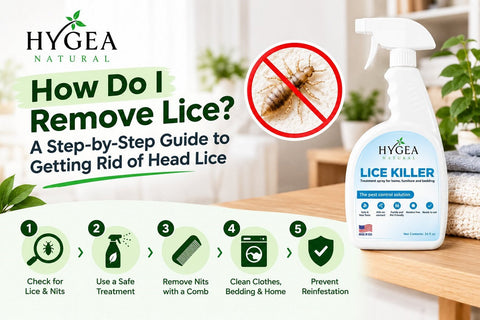
Step 1: Choose an Appropriate Head Lice Treatment
Start with a product specifically approved for treating head lice on human hair and scalp. Over-the-counter treatments are available, while prescription options may be recommended when other treatments haven't worked.
Don't use ordinary household insect sprays on the scalp. Products designed for furniture or other household pests aren't substitutes for head lice medication.
Step 2: Apply the Treatment Correctly
Follow the instructions provided with your selected lice treatment. Some products require application to dry hair, while others have different preparation requirements. Avoid using conditioner before medicated treatment unless the instructions specifically allow it.
Make sure the product reaches the areas where lice are commonly found, particularly behind the ears and near the neckline.
Step 3: Remove Lice and Nits with a Fine-Toothed Comb
Combing helps remove lice and eggs that remain attached to the hair. Divide the hair into manageable sections. Starting close to the scalp, gently pull a fine-toothed lice comb through each section toward the ends.
Step 4: Follow the Recommended Treatment Schedule
One treatment may not eliminate every louse or egg. Some medications kill live lice but don't reliably kill unhatched eggs. These products often require another application approximately seven to nine days later, depending on the instructions.
Other treatments can kill both lice and eggs and may not require routine retreatment.
How Do I Remove Lice Eggs from Hair?
Lice eggs, commonly called nits, are small oval structures firmly attached to individual hair strands. Unlike dandruff, they don't brush away easily.
To remove nits, work through small sections of hair using a fine-toothed lice comb. Begin near the scalp and comb slowly toward the ends.
How Do I Remove Lice from Bedding and Furniture?
Once you've treated the scalp, you may wonder whether lice are still hiding in your home. Head lice primarily live on human hair. They generally survive less than one or two days away from the scalp, making furniture transmission uncommon.
Because of this, extensive household cleaning isn't necessary. Still, a few practical steps can help address recently used items.
Wash Bedding and Clothing
Wash pillowcases, sheets, towels, hats, and clothing used during the two days before treatment.
When fabric care instructions allow, use hot water at 130°F (54°C) or higher and dry items using high heat.
Items that cannot be washed or dry-cleaned can be sealed in a plastic bag for two weeks.
Vacuum Recently Used Furniture
Vacuum sofas, upholstered chairs, mattresses, and other areas where the affected person recently rested their head.
Clean Hairbrushes and Accessories
Soak combs and brushes in hot water at a minimum of 130°F for five to ten minutes. Avoid sharing brushes, hats, and hair accessories while the infestation is being treated.
These simple precautions help support scalp treatment without turning household cleaning into an exhausting process.
How Long Does It Take to Remove Lice Completely?
Most head lice infestations can be managed within one to two weeks when treatment instructions are followed correctly, although continued checking may be needed.
The exact timeline depends on the medication used, whether eggs survive the initial treatment, and whether close contacts also have lice.
How Can You Prevent Lice from Coming Back?
Preventing another infestation starts with reducing opportunities for lice to spread between people. Encourage children to avoid direct head-to-head contact during play. Remind family members not to share hairbrushes, hats, or hair accessories.
Continue checking the scalp after treatment, especially when someone in the household recently had lice. If a child has head lice, notify close contacts when appropriate so they can check for symptoms.
Address Household Lice Concerns with Hygea Natural
Removing lice from the scalp is the most important part of treatment. However, families may also want to address mattresses, sofas, and other household surfaces that recently came into contact with an affected person's hair.
For those situations, Hygea Natural's Lice Killer Spray Treatment for Home offers a dedicated solution for targeted household surface treatment. Unlike ordinary bug sprays, this product is specifically formulated for lice-related concerns on approved household materials.
Hygea Natural describes its formula as non-toxic, odorless, and stain-free, making it a family-conscious option when used according to the product instructions.
Final Thoughts
If you're asking, "How do I remove lice?" start by treating the hair and scalp with an appropriate lice medication. Careful combing and follow-up checks help ensure the infestation is properly addressed.
For the home, focus on washing recently used fabrics, cleaning hair accessories, and vacuuming furniture where necessary. If you want an additional targeted option for approved household surfaces, Hygea Natural's Lice Killer Spray Treatment for Home is designed for that purpose.