Keeping your floors clean shouldn't mean worrying about damaging their finish. Whether you're dealing with muddy footprints, kitchen spills, or everyday dust, the cleaner you use can make a difference in how your floors look over time.
A pH neutral floor cleaner is often a practical choice for routine cleaning because it removes everyday dirt without relying on strongly acidic or alkaline formulas. It's particularly useful for many finished floors and delicate surfaces that require gentle care.
But not every cleaner labeled pH neutral is suitable for every floor. Understanding what to look for can help you choose a product that cleans effectively, protects your flooring, and fits your household's needs.
What Is a pH Neutral Floor Cleaner?
A pH neutral floor cleaner is a cleaning solution formulated to have a pH close to 7, the neutral point on the pH scale.
Products with lower pH levels are acidic, while those with higher levels are alkaline. Strongly acidic or alkaline cleaners can affect certain flooring materials, protective coatings, and finishes when used incorrectly.
Neutral cleaners are designed to handle routine soil, dust, and light grease without exposing compatible flooring to unnecessarily aggressive cleaning conditions.
However, pH alone doesn't determine whether a cleaner is suitable. Ingredients, concentration, application methods, and the flooring manufacturer's recommendations also matter.
Why Choose a pH Neutral Cleaner for Everyday Floor Cleaning?
Floors experience constant wear from shoes, furniture, spills, and regular foot traffic. Cleaning removes dirt that can make surfaces look dull or contribute to scratches.
The challenge is choosing a product that cleans effectively without being unnecessarily harsh.
Gentle on Compatible Floor Finishes
Some flooring materials are sensitive to acidic or highly alkaline cleaning products. Marble, limestone, and certain sealed surfaces may lose their appearance when exposed to unsuitable chemicals.
A compatible pH-neutral cleaner can be a practical option for maintaining these surfaces. However, always check whether the product is approved for your particular flooring material.
Suitable for Regular Maintenance
Kitchens, hallways, and living rooms often need frequent cleaning. A neutral floor cleaner is designed for routine use, making it a practical option for households that mop regularly.
Helps Maintain a Clean Appearance
The right cleaner should remove dirt without leaving a sticky or cloudy film. Residue can make floors look dull and may attract additional soil. Choosing a properly formulated cleaner and using the recommended amount helps prevent buildup.
A Practical Choice for Busy Households
Families with children and pets often pay close attention to the cleaning products they use in frequently occupied spaces. Hygea Natural offers floor-cleaning options marketed as non-toxic for household cleaning.
However, a neutral pH or non-toxic product description does not mean a cleaner is suitable for every type of exposure. Follow the label directions, keep concentrated products out of children's reach, and allow cleaned floors to dry before children or pets return.
How to Choose the Right pH Neutral Floor Cleaner
Choosing a floor cleaner involves more than checking the front label. The best option should suit your flooring material, cleaning needs, and preferred application method.
Check Your Flooring Material
Start by identifying the type of floor you have. Ceramic tile, vinyl, sealed stone, and finished wood may have different cleaning requirements. A product suitable for one surface isn't automatically appropriate for another.
For example, natural stone generally benefits from neutral cleaning products because acidic solutions can damage certain stone surfaces.
Look for a Clearly Labeled pH Neutral Formula
A product described as gentle isn't necessarily pH neutral. Check the product description or technical information for a specific pH-neutral claim.
Hygea Natural offers pH-neutral cleaner for compatible finished floors and surfaces. Its concentrated formula is designed to help remove everyday dirt and grease.
One practical benefit is its dilution instructions. The manufacturer's recommended mixture is four ounces of concentrate per gallon of water. This allows you to prepare the cleaning solution according to the product directions rather than using an undiluted concentrate for routine mopping.
When comparing floor cleaners, consider the product's pH, intended surfaces, dilution requirements, and cleaning instructions instead of relying only on broad claims such as "gentle" or "all-purpose."
Consider Residue and Rinsing Requirements
A cleaner that leaves visible residue can make floors appear dirty soon after mopping. Look for products that explain whether rinsing is necessary and how much solution should be applied.
Some formulas are designed for no-rinse cleaning, while others require a separate rinse depending on the floor type and application. Following the manufacturer's directions is more reliable than assuming every neutral cleaner works the same way.
Consider Household Safety and Fragrance
If you have children or pets, consider the cleaner's ingredients, fragrance, and safety instructions. Hygea Natural describes its floor-cleaning formulas as non-toxic and positions them for household use.
However, no cleaner should be considered safe for every possible exposure simply because it has a neutral pH. Keep concentrated products out of children's reach, avoid unnecessary skin contact, and allow cleaned floors to dry before normal use.
Which Floor Types Can You Clean with a pH Neutral Cleaner?
Neutral cleaners are useful for many flooring materials, but compatibility should always be confirmed.
Ceramic and Porcelain Tile
These surfaces are generally durable and suitable for routine cleaning with compatible neutral solutions. A suitable cleaner can remove footprints, dust, and light grease without relying on aggressive chemicals.
Marble and Natural Stone
Marble, limestone, and travertine are particularly sensitive to acidic products. A stone-compatible neutral cleaner is often recommended for regular maintenance. Avoid acidic cleaning solutions that may cause etching or dull patches.
Vinyl and Finished Floors
Many vinyl and finished flooring products can be cleaned with neutral solutions. However, flooring manufacturers may have specific requirements concerning moisture, protective coatings, and cleaning ingredients.
Hardwood and Laminate
These floors need additional care because excess moisture can damage wood and seams. Use only products approved for the particular flooring finish. A lightly damp mop is generally preferable to soaking the surface.
Choose EasyBreeze for Everyday Floor Cleaning
When choosing a pH-neutral floor cleaner, look for a formula that suits your flooring, provides clear dilution instructions, and handles the everyday dirt that builds up in busy areas.
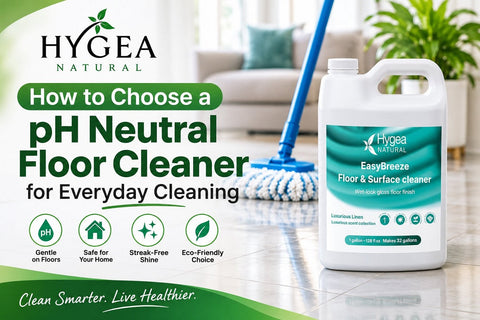
Hygea Natural's EasyBreeze pH Neutral Floor & Surface Cleaner is designed for compatible finished floors and surfaces. Its pH-neutral formula is intended for routine cleaning, while its concentrated format gives you clear mixing instructions for preparing the solution.
The recommended dilution is four ounces of concentrate per gallon of water. This makes it straightforward to prepare the cleaner for regular use while following the manufacturer's directions.
Before choosing EasyBreeze or any other floor cleaner, check the product instructions against your flooring manufacturer's care recommendations. This is particularly important for hardwood, laminate, and specialty finishes that may have specific cleaning requirements.
Final Thoughts
Choosing the right pH-neutral floor cleaner starts with understanding your flooring material and how often you clean. Look for a product that removes everyday dirt, works with your floor's finish, and provides clear instructions for dilution and application.
For routine maintenance, Hygea Natural's EasyBreeze pH Neutral Floor & Surface Cleaner offers a dedicated cleaning option for compatible finished floors and surfaces. Check its instructions and your flooring manufacturer's recommendations before use to make sure it is appropriate for your home.
If you're also comparing different household cleaning methods, read our related guide, How to Clean Floors Without Harsh Chemicals, for more information about floor-care methods and the difference between natural and non-toxic cleaning.