Keeping your floors clean is important, especially when you share your home with dogs, cats, or other pets. However, choosing a floor cleaner requires a little extra attention. Pets spend much of their time close to the floor, walk across freshly cleaned surfaces, and may lick their paws afterward.
The right cleaning product should remove everyday dirt without creating unnecessary exposure risks for your pets. Understanding product ingredients, surface compatibility, and proper cleaning practices can help you maintain a clean and comfortable home.
What Makes a Floor Cleaner Safer for Pets?
A pet-conscious floor cleaner should be suitable for household use when applied according to its label instructions. It should also be compatible with your flooring and provide clear guidance about dilution, application, and drying.
Here are a few things to consider when choosing a product:
-
Non-toxic product claims: Look for products specifically marketed as non-toxic and review their ingredient and safety information.
-
Clear usage instructions: The manufacturer should explain how to prepare and apply the cleaning solution.
-
Residue management: Use the recommended amount to reduce unnecessary product buildup on floors.
-
Surface compatibility: Make sure the formula is approved for your particular flooring material.
-
Fragrance and ingredients: Consider your pet's sensitivities and avoid products containing ingredients that may be harmful to animals.
Remember that a product labeled non-toxic is not automatically safe to ingest or suitable for every possible exposure. Proper use and storage remain important.
Which Floor Cleaning Ingredients Should Pet Owners Watch For?
Some cleaning ingredients can irritate pets or cause health problems if swallowed, inhaled, or contacted in concentrated amounts.
For example, concentrated bleach can cause irritation and injury if ingested. Strong cleaning solutions may also irritate the skin or respiratory system when used improperly.
Pet owners with cats should pay particular attention to products containing phenols, which can be highly toxic to cats. Essential oils also require caution because certain oils and concentrations can cause adverse reactions, particularly in cats.
You don't necessarily need to avoid every conventional cleaning product. The important thing is to read its label, understand the intended use, and follow the recommended precautions. The ASPCA's guidance on household cleaning products provides additional information about common household exposure risks.
How to Choose a Pet-Friendly Floor Cleaner
Choosing the right product involves more than looking for a pet-safe label. Consider these factors before buying a floor cleaner.
Check the Flooring Compatibility
Different flooring materials require different cleaning methods. A product suitable for ceramic tile may not be appropriate for hardwood, laminate, or natural stone.
For example, acidic cleaners can damage marble and limestone, while excessive moisture can affect hardwood and laminate flooring. Choose a product that specifically lists your floor type as a suitable application.
Consider a pH-Neutral Formula
A pH-neutral floor cleaner can be a practical option for routine cleaning because it does not rely on strongly acidic or alkaline formulas.
However, neutral pH alone does not establish whether a product is pet-safe. You should also review its ingredients, safety instructions, and surface compatibility.
Review Dilution Instructions
Concentrated floor cleaners need to be mixed according to the manufacturer's directions. Using more product than recommended does not necessarily improve cleaning and may leave unnecessary residue.
Follow the specified water-to-concentrate ratio and avoid mixing different cleaning products.
Check the Product's Safety Information
Look for clear information about handling, storage, ventilation, and drying time. If your pet has a known sensitivity or medical condition, ask your veterinarian before introducing a new cleaning product.
Hygea Natural Floor Cleaners to Consider
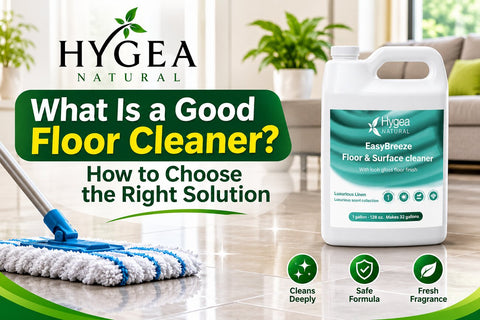
Hygea Natural offers several floor-cleaning products marketed as non-toxic options for household use. Two relevant choices are EasyBreeze and Lemon Fresh. The first one is designed for compatible finished floors and surfaces, including vinyl, ceramic tile, marble, and natural stone.
Its key features include:
-
A pH-neutral formula for compatible surfaces.
-
Cleaning performance designed to remove everyday dirt and grease.
-
A concentrated format with clear dilution instructions.
-
A non-toxic product positioning for household and pet environments.
On the other side, Hygea Natural markets Lemon Fresh as a non-toxic, ammonia-free, pH-neutral cleaner for finished floors and other compatible surfaces. It is designed to remove everyday soil and grease while leaving a glossy finish.
For pet households, neither product should be treated as safe for ingestion or direct contact with wet cleaning solution. Keep animals away during application and follow the manufacturer's drying and handling instructions.
How to Clean Floors Safely When You Have Pets
Even when using a product marketed as pet-friendly, your cleaning routine matters.
Follow these practical steps:
-
Move pets away from the cleaning area: Keep dogs, cats, and other animals in another room while preparing and applying the solution.
-
Remove loose dirt first: Sweep or vacuum hair, dust, and debris before mopping.
-
Use the recommended dilution: Follow the product label instead of adding extra concentrate.
-
Avoid mixing cleaners: Never combine different cleaning products unless the manufacturer specifically instructs you to do so.
-
Allow floors to dry: Keep pets away until the surface is completely dry and the label's re-entry instructions have been met.
-
Store products securely: Keep concentrates, sprays, and other cleaning supplies somewhere pets cannot reach.
The CDC also recommends keeping pets away from areas being cleaned or disinfected and following product instructions carefully. This is particularly important for birds, which can be sensitive to airborne fumes.
What Should You Do About Pet Stains and Accidents?
Routine floor cleaning and removing pet accidents are two different tasks. Urine, vomit, and other organic messes may require a product specifically designed for stain and odor removal.
Hygea Natural's Pet Odor and Stain Remover is an enzyme-based option intended for pet-related messes on water-safe surfaces, including carpet, upholstery, and certain hard surfaces.
It is designed for spot cleaning rather than replacing your regular floor cleaner. Check its instructions and test an inconspicuous area before applying it to a particular flooring material.
Final Thoughts
Choosing a floor cleaner for a pet-friendly home means considering more than cleaning performance. Check the ingredients, pH level, flooring compatibility, and product instructions before making a decision.
With appropriate products and careful cleaning habits, you can maintain clean floors while reducing unnecessary exposure risks for the pets sharing your home.